
Design Guides
5 Reasons Why a Kitchen Island is Worth It (2026 Guide)

A central island is rated essential or desirable by 74% of home buyers, tying it with pull-out shelving as one of the most wanted kitchen features on the market (NAHB, "What Home Buyers Really Want", 2024). If you're weighing whether an island is worth the disruption of a renovation, here are five reasons the answer is usually yes.
Reason #1: Buyers actively want it
An island isn't just a nice-to-have for your own use — it's one of the features buyers specifically look for. 74% of home buyers rate a central island essential or desirable (NAHB, "What Home Buyers Really Want," 2024), and in the luxury segment, 85% of buyers ask their agent for one specifically — tied with granite or quartz countertops as the second most-requested feature after double vanities (Redfin Luxury Homebuyer Survey, 2024).
That demand isn't evenly split across generations, either. More than half of Millennial and Gen X buyers say a central island — or a double island — would positively influence their decision to buy a home, compared with only 25%–37% of Boomer buyers (NAHB generational research). If you plan to sell within the next decade, that gap matters.
Our finding: clients often ask whether an island "pays for itself." We can't promise a number, but we can say this: in nearly every listing conversation we've been part of, agents call out the island specifically as a selling point — buyers notice its absence in a way they rarely notice its presence.
Reason #2: It adds real workspace, not just counter space
A galley or U-shaped kitchen has one continuous stretch of counter. An island adds a second, independent one — and homeowners are sizing them generously: about half of renovated islands now exceed 7 feet in length, with rectangular shapes outpacing L-shapes (NAR, "Designing a Kitchen in 2026", citing Houzz data).
That extra footprint means you can prep a full meal on the island while someone else uses the perimeter counters for cleanup or plating — something a single-run kitchen simply can't do. It's the difference between one person cooking and a kitchen that can actually host two or three people working at once.
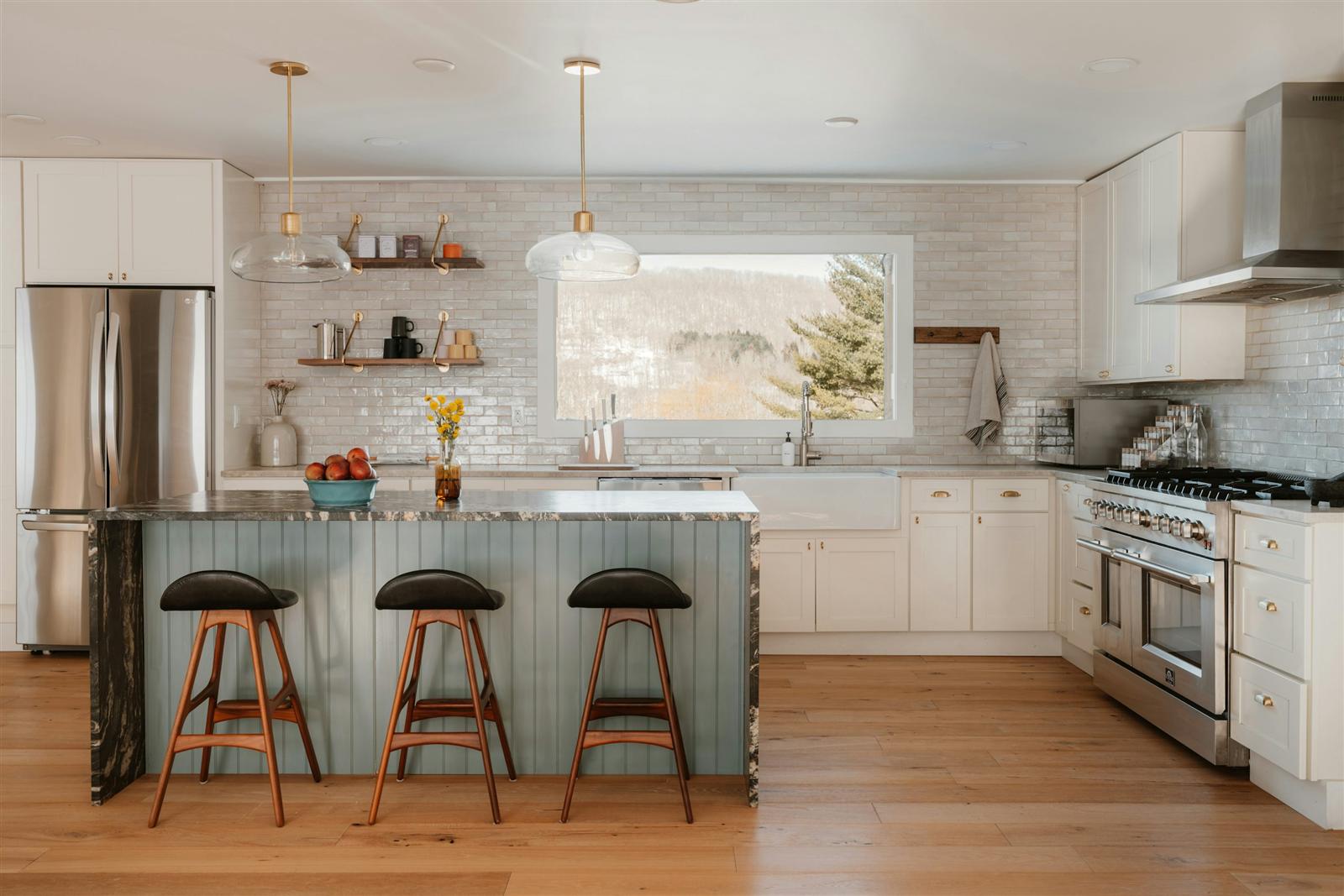
Reason #3: It creates storage you didn't have before
An island isn't just a countertop — it's a run of base cabinets that didn't exist in your kitchen before. Homeowners are using that extra capacity: 94% of homeowners add specialty storage features to their upgraded cabinetry, including pull-out waste bins (64%), tray and cookie-sheet storage (55%), and dedicated spice storage (41%) (Houzz 2026 U.S. Kitchen Trends Study). A meaningful share of that specialty storage lands in the island itself, since it's often the newest and most flexible cabinet run in the room.
More than half of homeowners now go a step further and integrate an appliance directly into the island — a dishwasher, a microwave, sometimes a beverage fridge (NAR, "Designing a Kitchen in 2026"). That turns the island from extra storage into a self-contained prep-and-cleanup zone.
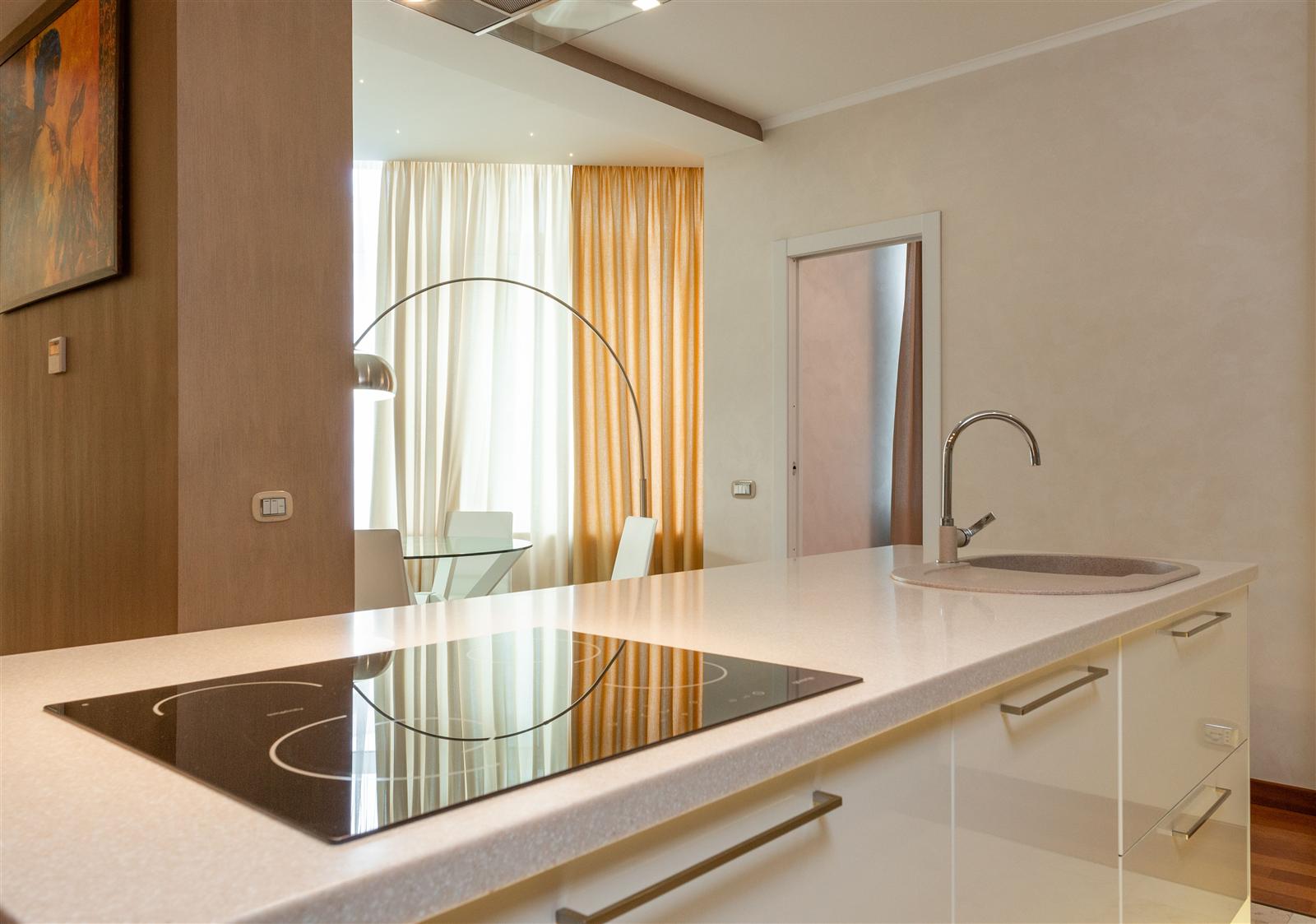
Reason #4: It becomes the social hub of the home
Islands do something perimeter counters can't: they let people face each other while someone cooks. That's a big part of why 58% of renovating homeowners added or updated a kitchen island in their last remodel (Houzz 2026 Kitchen Trends Study) — it's rarely just about counter space. Families use islands for multi-generational cooking, homework, and casual meals that would otherwise happen at a separate table.
If seating is the main draw for you, our island height guide covers counter-height versus bar-height seating in detail — the right choice depends on how you plan to use that social space.

Reason #5: It works even in a smaller kitchen
You don't need a sprawling kitchen to get these benefits. A growing "micro-island" trend uses scaled-down islands — narrow butcher-block carts, slim built-ins, or mobile rolling islands — to add counter space, storage, and casual seating without blocking walkways in a smaller room (Apartment Therapy, 2026).
The trade-off is that a compact island demands more precise planning than a large one — every inch has to earn its place. If you're working with a tighter footprint, our kitchen island mistakes guide covers the clearance and proportion pitfalls that matter even more in a smaller room.

The case for an island, at a glance
| Benefit Category | Supporting Data Point | Source |
|---|---|---|
| Buyer demand | 74% of buyers rate an island essential/desirable | NAHB, 2024 |
| Luxury buyer demand | 85% of luxury buyers specifically request one | Redfin, 2024 |
| Workspace | ~50% of renovated islands now exceed 7 feet | NAR/Houzz, 2026 |
| Storage | 94% of homeowners add specialty cabinet storage | Houzz, 2026 |
| Appliance integration | 50%+ integrate a dishwasher or microwave into the island | NAR, 2026 |
| Adoption/demand rate | 58% of renovating homeowners added or updated an island | Houzz, 2026 |
| Small-kitchen fit | Micro-islands bring the same benefits without blocking walkways | Apartment Therapy, 2026 |
Source: NAHB, Redfin, NAR, Houzz, Apartment Therapy, 2024–2026.
Frequently asked questions
Do kitchen islands actually increase home value?
There's no single dollar figure that applies to every home, but buyer-demand data is strong: 74% of buyers rate an island essential or desirable, and 85% of luxury buyers specifically request one (NAHB, 2024; Redfin, 2024). Agents consistently call it out as a selling point during showings.
Is a kitchen island worth it in a small kitchen?
Often, yes — a scaled-down "micro-island," such as a narrow cart or slim built-in, can add prep space, storage, and casual seating without blocking walkways (Apartment Therapy, 2026). The planning has to be more precise than in a larger kitchen, though.
What's the biggest functional benefit of a kitchen island?
Extra, independent workspace. About half of renovated islands now exceed 7 feet, giving you a second prep zone that lets more than one person cook or clean up at the same time (NAR/Houzz, 2026).
Do most homeowners add appliances to their island?
More than half do — commonly a dishwasher or microwave, which turns the island into a self-contained prep-and-cleanup zone rather than just extra counter space (NAR, "Designing a Kitchen in 2026").
What mistakes should I avoid if I add an island?
Clearance, electrical planning, seating overhang, sizing for the room, and ventilation are the five most common pitfalls. See our kitchen island mistakes guide for the full breakdown.
The bottom line
The data lines up with what we see in practice: islands are one of the most-wanted features for buyers, they add genuine workspace and storage a single counter run can't match, and they double as the social center of the home. Even in a smaller kitchen, a scaled-down version delivers most of the same benefits. The real question isn't whether an island is worth it — it's whether yours is sized and planned correctly, which is exactly what a good design process solves for.
Book a design consultation and we'll help you figure out the right island for your kitchen.
Sources
- NAHB, What Home Buyers Really Want, 2024 Edition, retrieved 2026-07-31, link
- Redfin, Luxury Homebuyer Agent Survey, retrieved 2026-07-31, link
- NKBA/KBIS, 2026 Kitchen Trends Report (via Forbes), retrieved 2026-07-31, link
- NAR, Designing a Kitchen in 2026: Six Trends to Watch, retrieved 2026-07-31, link
- Houzz, 2026 U.S. Kitchen Trends Study, retrieved 2026-07-31, link
- Apartment Therapy, The Kitchen Island Rule Designers Are Breaking in 2026, retrieved 2026-07-31, link