
Design Guides
Shaker vs. Flat Panel Kitchen Cabinets: Which Door Style Is Right for You? (2026)
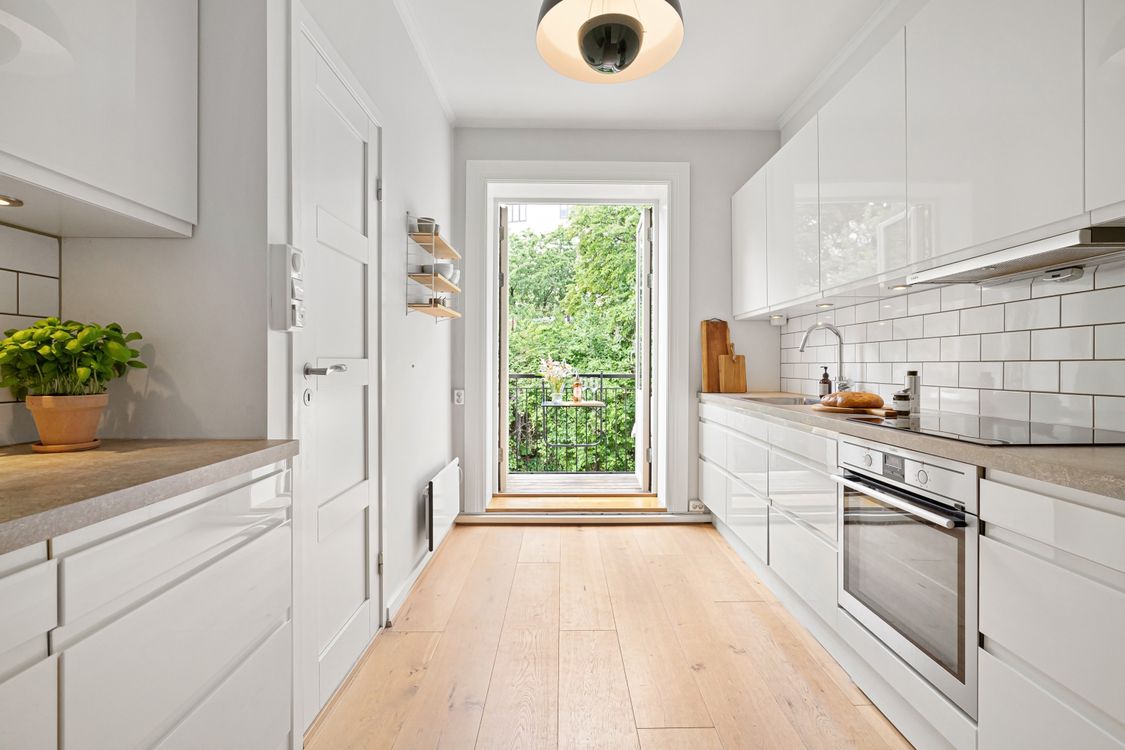
Two cabinet doors, two completely different philosophies. A Shaker door is built from five separate pieces around a recessed center panel. A flat panel door is one flat piece of material, full stop — no frame, no seam, nothing to catch the eye. That single construction difference is what decides almost everything else: cost, cleaning, and how modern or classic the room feels.
What's the actual difference between Shaker and flat panel doors?
A Shaker door is built from five pieces — four frame rails and stiles around a flat, recessed center panel. A flat panel door is one piece, typically MDF or plywood with a veneer or laminate face, with no frame and no separate panel at all (Kitchen Cabinet Depot, 2026).
Shaker reads as quiet detail — a visible frame line even in a plain paint color. Flat panel reads as no detail at all, which is exactly its appeal in a minimalist or European-style kitchen. Neither hides anything; they're just built to show a different amount of information.
| Feature | Shaker | Flat panel |
|---|---|---|
| Construction | Five-piece frame + recessed panel | Single flat slab, no frame |
| Look | Transitional, timeless, quiet detail | Minimal, modern, no detail |
| Cleaning | Frame line needs a bit more attention | One flat plane, wipes in one pass |
| Relative cost | Higher — more milling, joinery | Lower — simpler build |
| Best fit | Traditional to transitional kitchens | Modern, European-style frameless kitchens |
Source: Kitchen Cabinet Depot, 2026; based on cabinet-industry construction and maintenance guidance, not a single controlled study.
Which door style costs less to build?
Flat panel generally costs less. It skips the milling, edge-profiling, and joinery a five-piece Shaker door requires, and cabinet fabricators consistently point to that reduced labor as the reason (Kitchen Cabinet Depot, 2026; USA Cabinet Express, 2026). We're not citing a specific percentage here — no single study puts a number on it — but the direction is consistent across every fabricator we've checked.
The gap narrows fast once you add a high-end veneer, a lacquer finish, or a large panel size to a flat door. Simple construction doesn't mean simple pricing once material and finish enter the equation.
Which is easier to keep clean?
Flat panel wins on maintenance. A single flat plane has no recessed seam for grease or dust to collect in, so a wipe-down covers the whole door in one pass (Kitchen Cabinet Depot, 2026). Shaker's inner frame line collects a bit more, though it's a matter of extra seconds, not a real chore.
The trade-off runs the other way on appearance: a flat panel's single uninterrupted surface shows fingerprints and light scratches more visibly than a Shaker front, where the frame line breaks up the eye and hides minor marks.
Our finding: the flat panel kitchens that hold up best in daily use are matte or textured finishes, not high-gloss lacquer. Gloss shows every fingerprint on a slab door; matte and textured surfaces hide the same marks almost entirely — the same texture logic we cover in our guide to textured wood-grain cabinetry.
Which door style suits a modern vs. traditional kitchen?
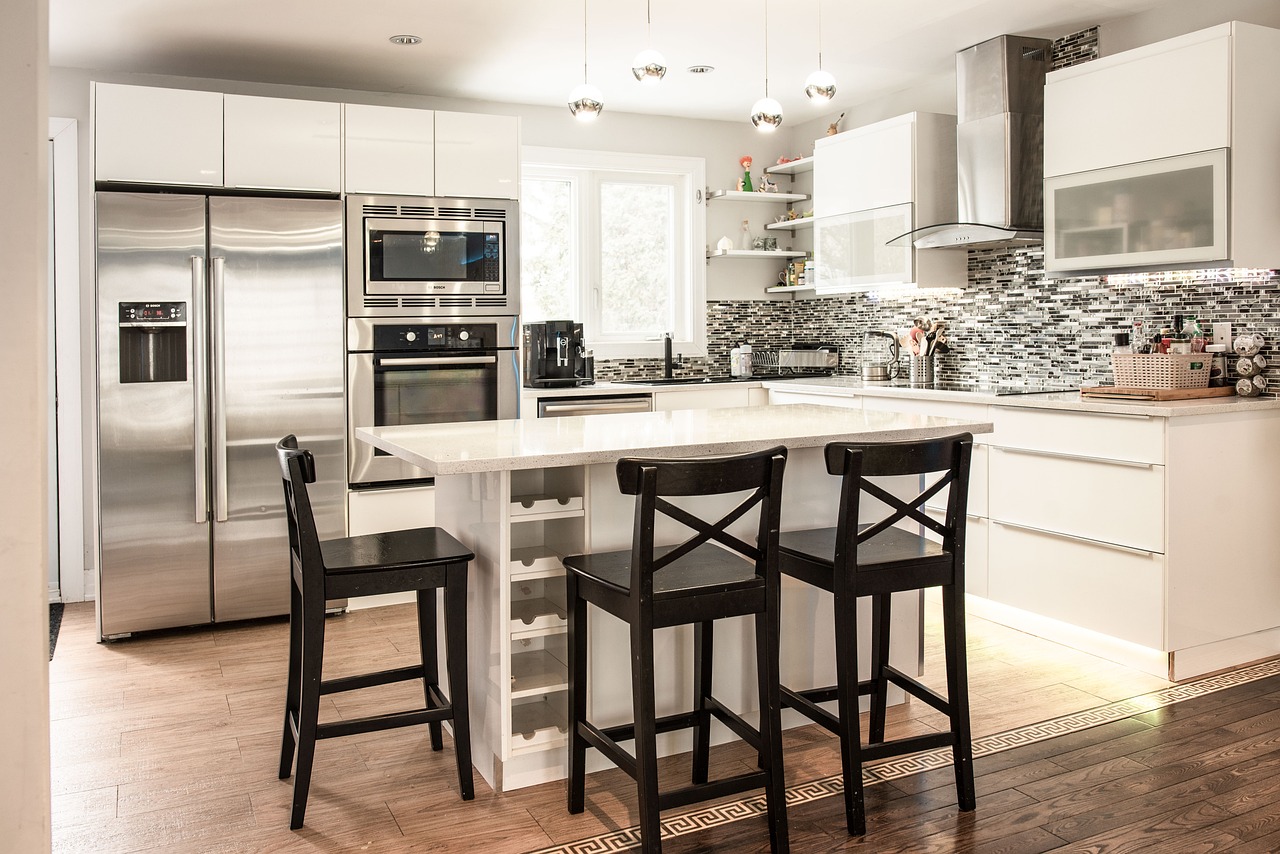
Flat panel is the default for modern and European-style frameless kitchens — it's the look behind handleless cabinetry and minimalist layouts. Shaker remains the more versatile, transitional choice, equally comfortable in a modern, farmhouse, or classic kitchen because its detail is subtle enough not to fight any of them.
Color reinforces both looks well. White stays the most-chosen cabinet color at 33%, wood tones sit at 23%, and off-white at 14% (Houzz 2025 Kitchen Trends Study). A white flat panel reads crisp and minimal; a wood-tone flat panel reads warm and Scandinavian; either color works just as naturally on a Shaker front.
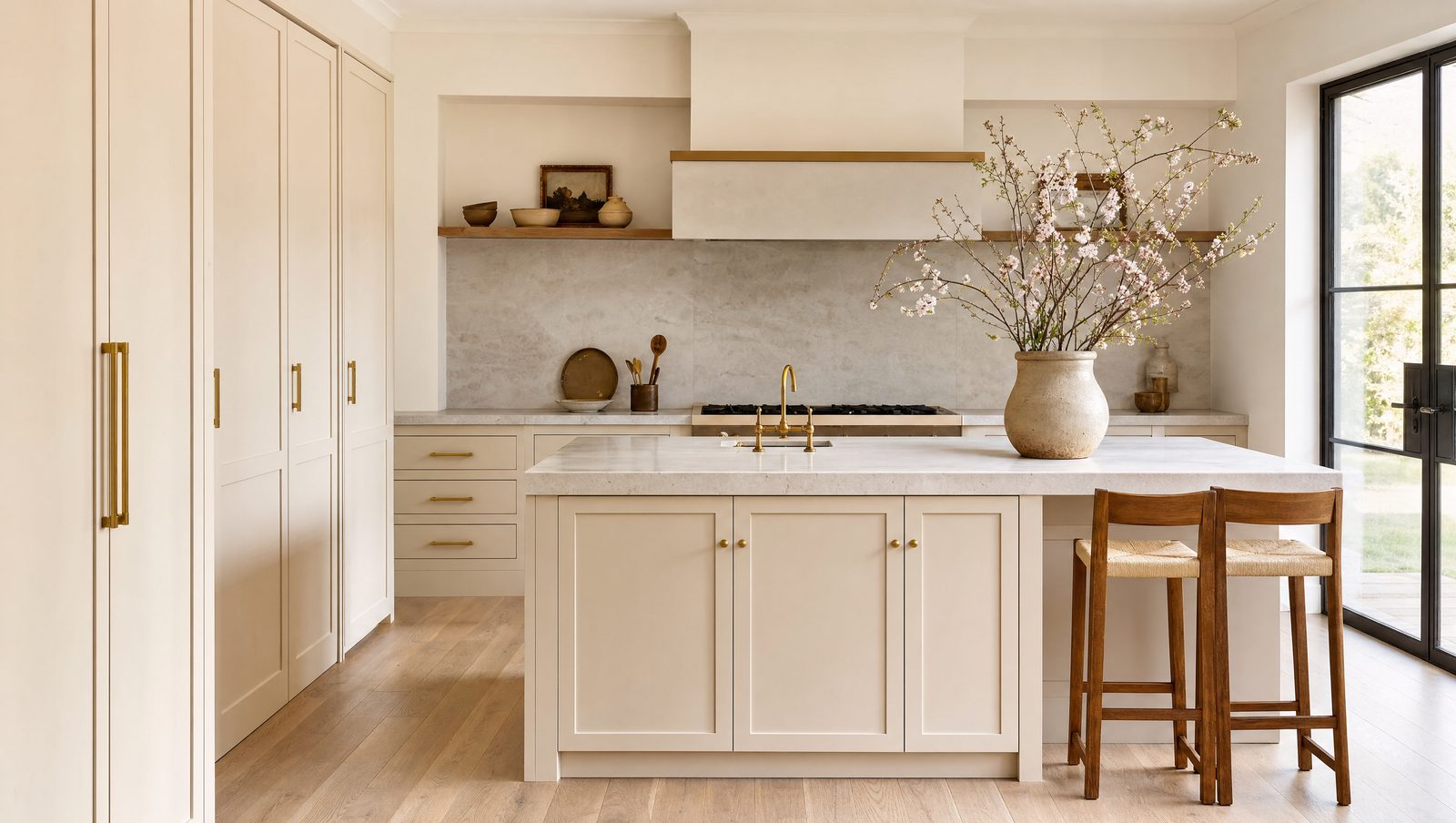
For a deeper look at how door style interacts with the rest of a kitchen's design, see our guide to functional kitchen design that's also beautiful.
See both door styles in our cabinet collection
Both styles are stock items in our own cabinet lines, so you can compare them directly rather than only in theory:
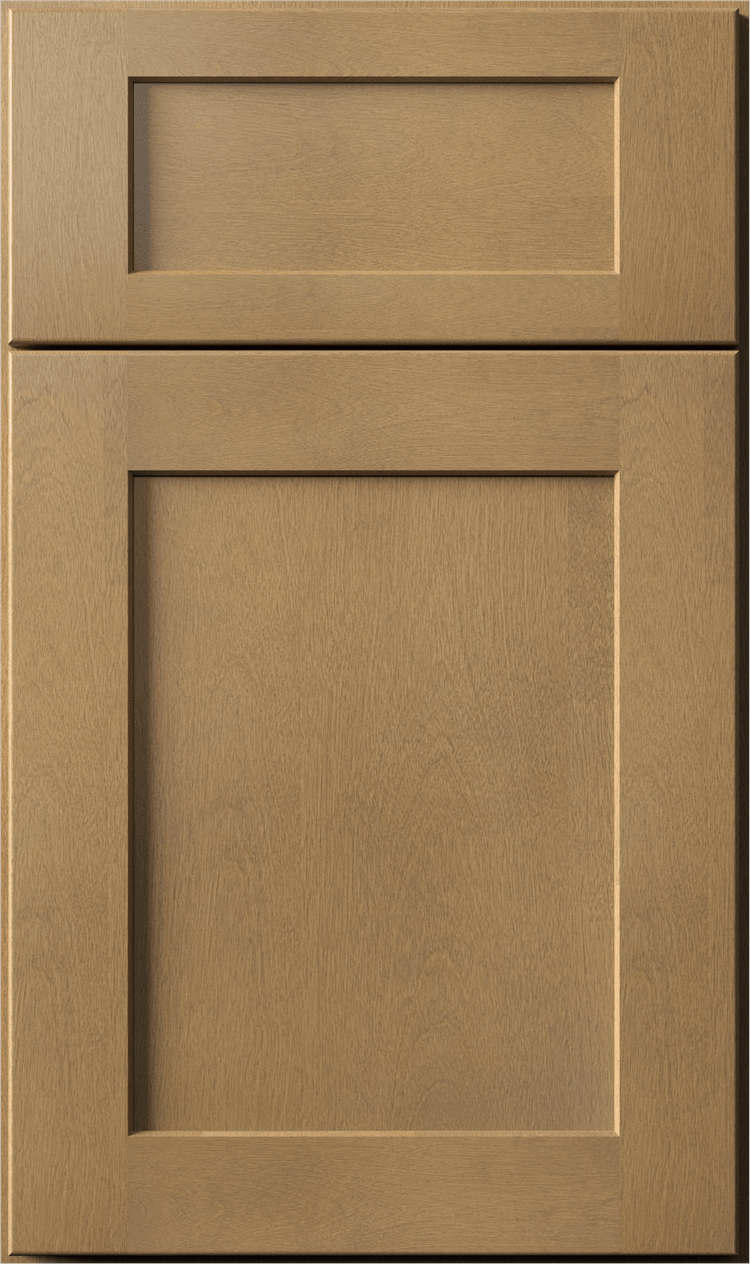
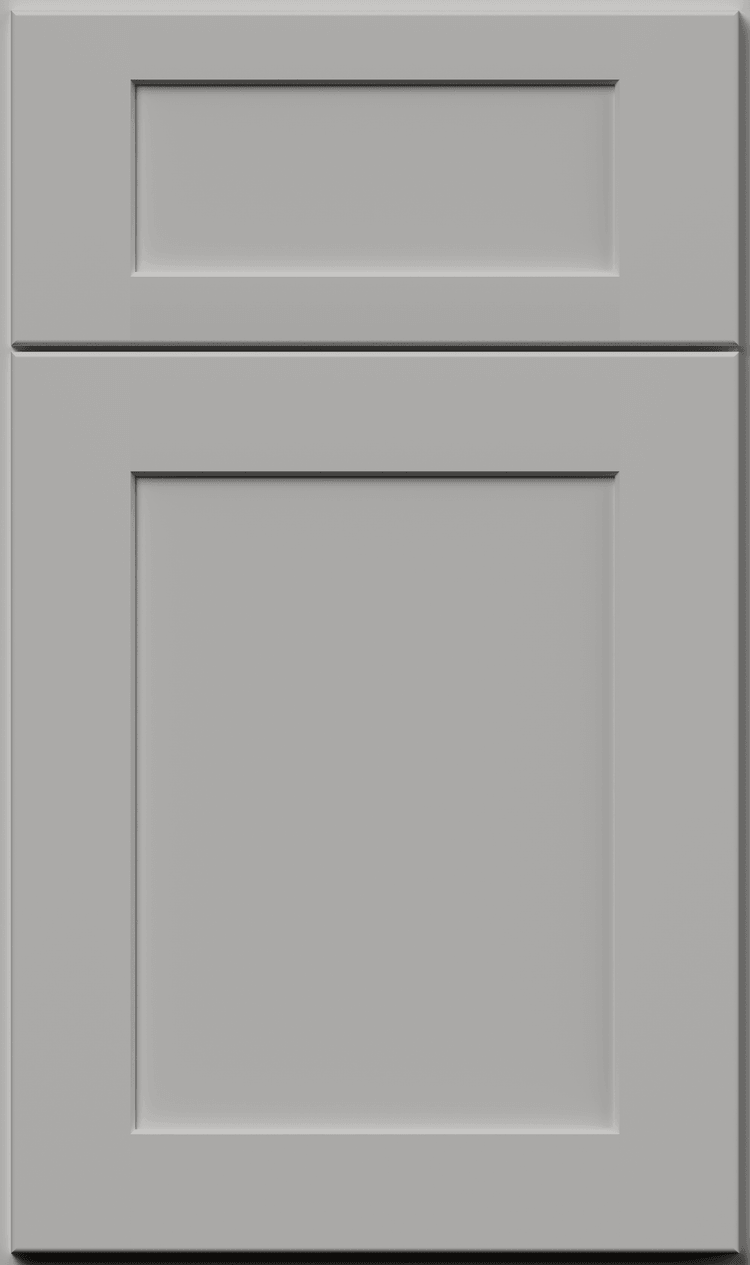
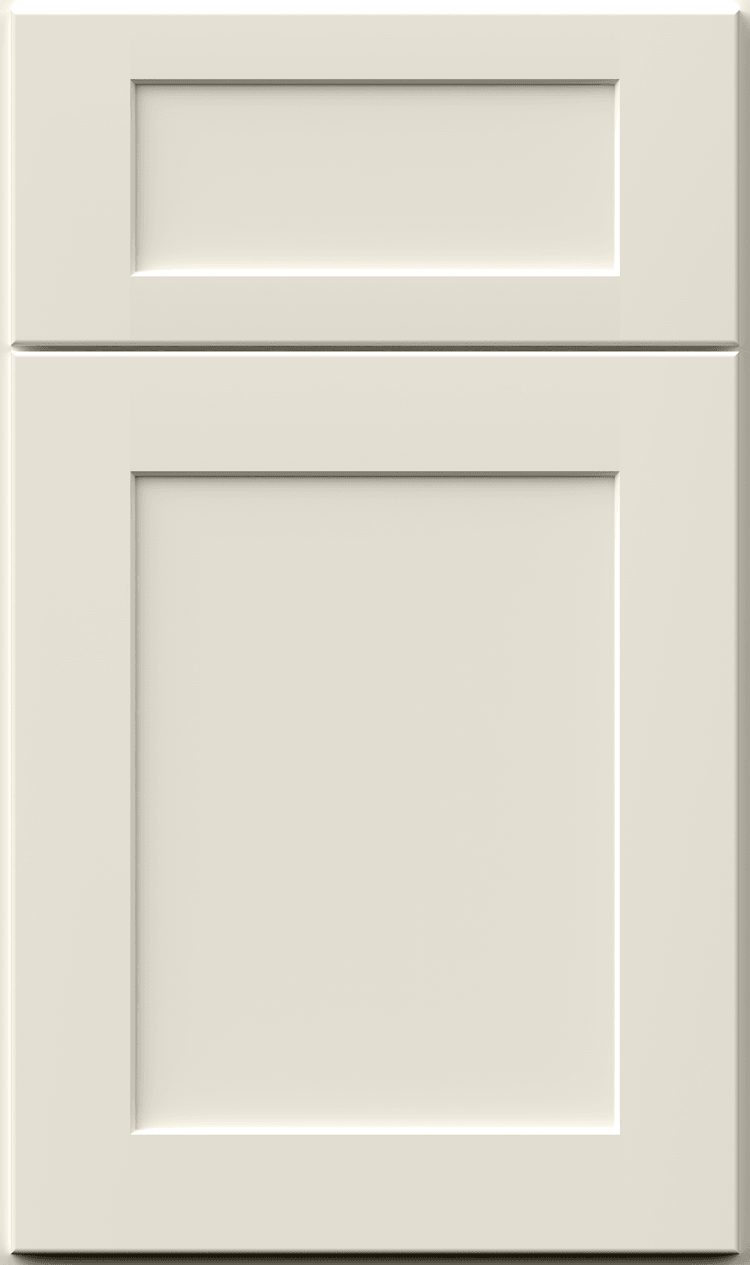
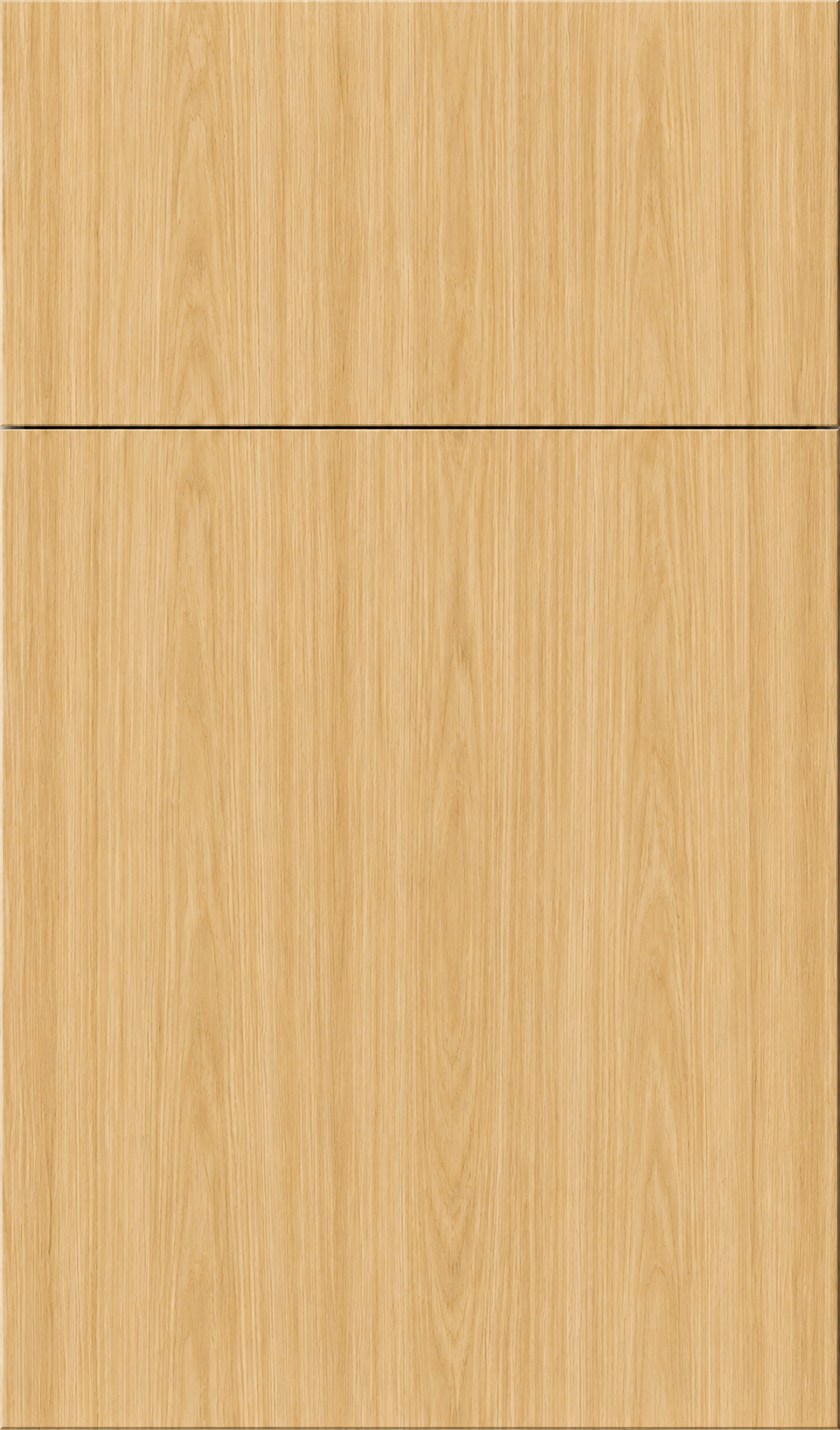
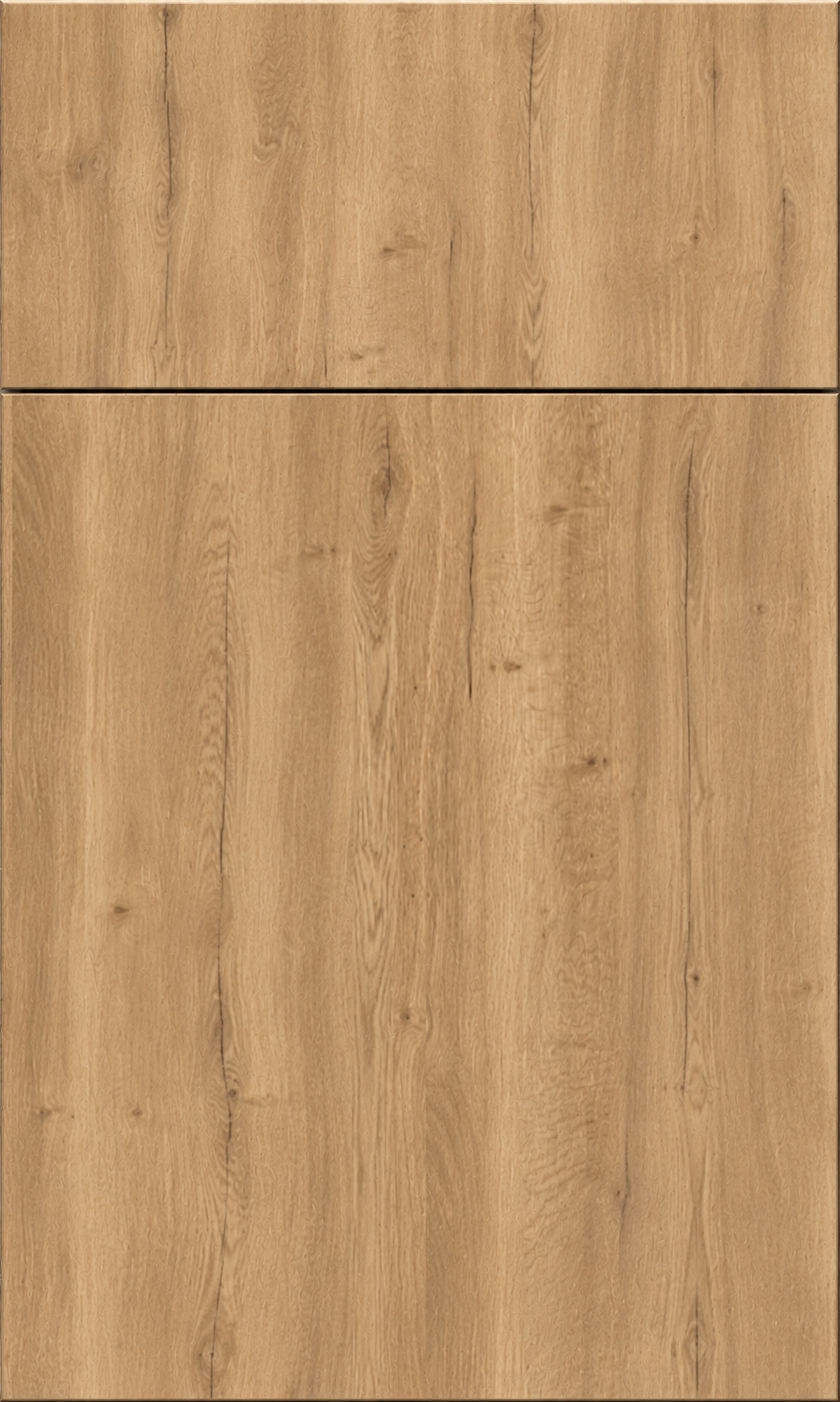
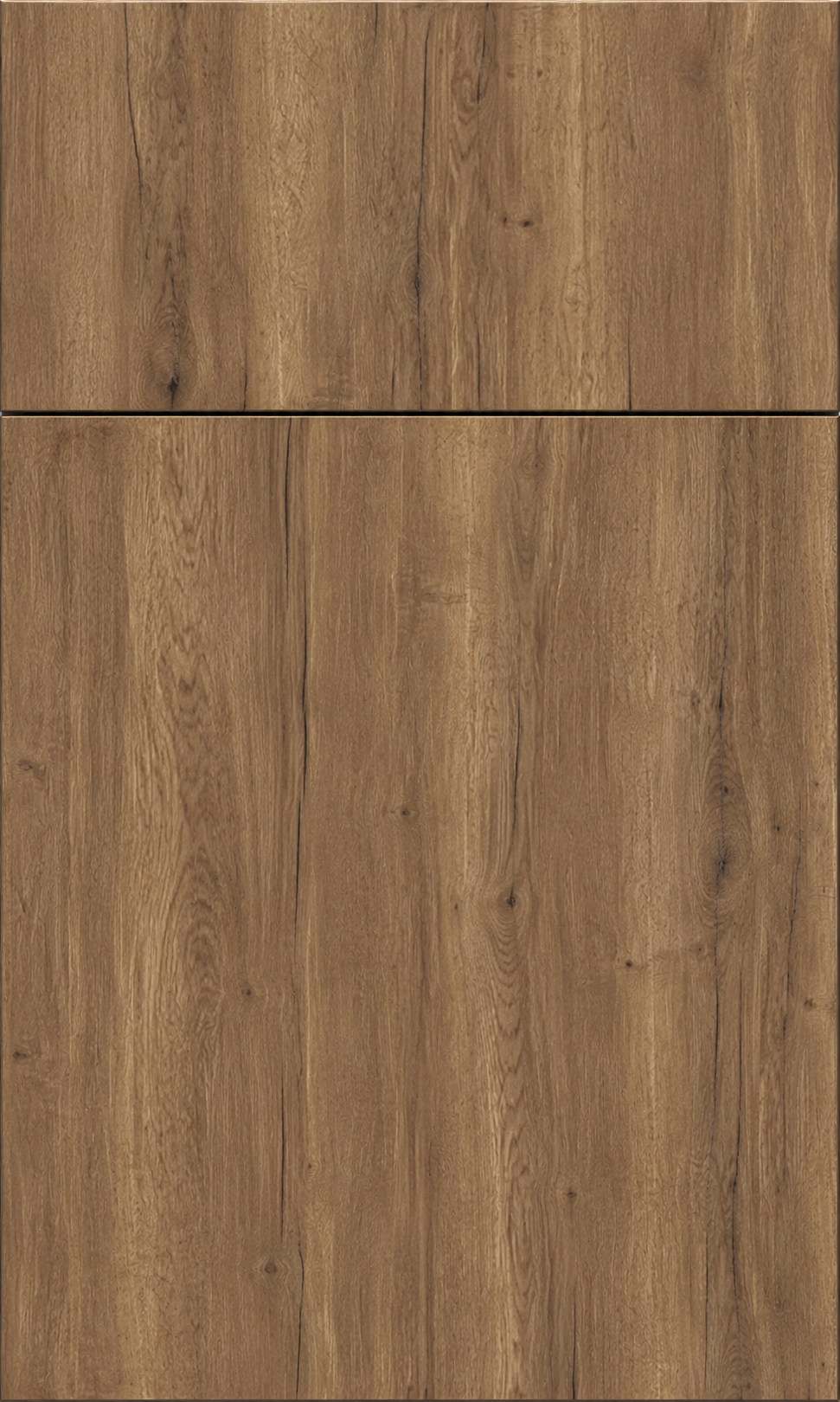
You can browse the full spec sheet for either door style, including frame type, material, and lead time, on our cabinet collection page.
Which door style should you choose?
Start with how you want the room to feel. If you want cabinetry that recedes into a minimal, European-style kitchen with no visible hardware or detail, flat panel is the more direct route. If you want a door that works with a modern, transitional, or classic room without committing the whole kitchen to one aesthetic, Shaker is the safer, more flexible pick.
Then weigh the practical side: flat panel usually costs less and wipes clean faster, but shows fingerprints more openly on a glossy finish. Shaker costs a bit more for the extra joinery, but its frame line hides everyday wear better. Neither answer is universal — only the right one for your kitchen. If you're also deciding between cabinet tiers, our guide to stock, semi-custom, and custom cabinets covers that decision alongside door style.
Frequently asked questions
What is a flat panel cabinet door?
A flat panel (or slab) door is a single flat piece of material with no frame, no recessed panel, and no molding — the opposite construction from a Shaker door. It reads clean, minimal, and modern, and is common in European-style frameless cabinetry.
Is a flat panel door the same thing as a slab door?
"Flat panel" and "slab" describe the same construction — a single uninterrupted surface rather than a framed door with a separate center panel. Both terms are used interchangeably across the cabinet industry.
Are flat panel cabinets cheaper than Shaker?
Generally, yes. Flat panel doors skip the milling, joinery, and assembly steps a five-piece Shaker door requires, and cabinet fabricators consistently note lower labor as the reason (Kitchen Cabinet Depot, 2026). The exact difference depends on material, finish, and kitchen size.
Are flat panel cabinets harder to keep looking good over time?
It depends on material more than door style. Slab doors are typically MDF or plywood with a veneer or laminate face, which resists warping well but shows fingerprints and scratches on a single uninterrupted surface more visibly than a broken-up Shaker front (Kitchen Cabinet Depot, 2026).
Which door style is easier to clean?
Flat panel. Its single plane has no recessed seam to trap grease or dust, so a wipe-down covers the whole door in one pass — while a Shaker door’s inner frame line needs a bit more attention (Kitchen Cabinet Depot, 2026).
The bottom line
Shaker gives you a subtle frame line that suits nearly any kitchen style and hides everyday wear well. Flat panel gives you a single, minimal surface that costs less to build and wipes clean in one pass, at the expense of showing fingerprints more openly. Pick the one that matches how your home should feel, then choose the finish that supports the way you actually use the kitchen.
Book a design consultation and we'll help you compare both door styles in your own finishes and layout.