
Design Guides
How to Choose the Right Kitchen Sink Size: A Complete Guide
Sink size affects almost everything else in your kitchen layout — cabinet width, countertop cutout, and how comfortable the space feels to work in every day. Bowl depth alone comes in several standard options, from 6½ inches up to 10 inches, and the right one depends entirely on how you actually use your sink (Elkay, "Kitchen Sink Buying Guide"). Here's how to think through size, bowl configuration, mounting style, and material together.
Why bowl depth matters more than most buyers realize
Sink depth is one of the most overlooked sizing decisions, and it directly trades off against storage and comfort. A 6½" bowl holds less but preserves more usable cabinet space underneath, while an 8" depth accommodates larger pots and pans, and a 9–10" bowl handles tall stockpots or a full sink of dishes without splashing (Elkay).
If accessibility is a priority for your kitchen, depth becomes a hard limit rather than a preference: ADA-compliant installations cap bowl depth at 6" for undermount sinks and 6½" for drop-in sinks. Our accessible kitchen design guide covers the fuller set of accessibility requirements if that's a priority for your renovation.
Single bowl, double bowl, or something else
A single-bowl sink gives you one uninterrupted basin — the most flexible option for washing large cookware, sheet pans, or oversized items that wouldn't fit in a divided sink. It's also the simplest to fit into a standard cabinet layout, since there's only one basin footprint to plan around.
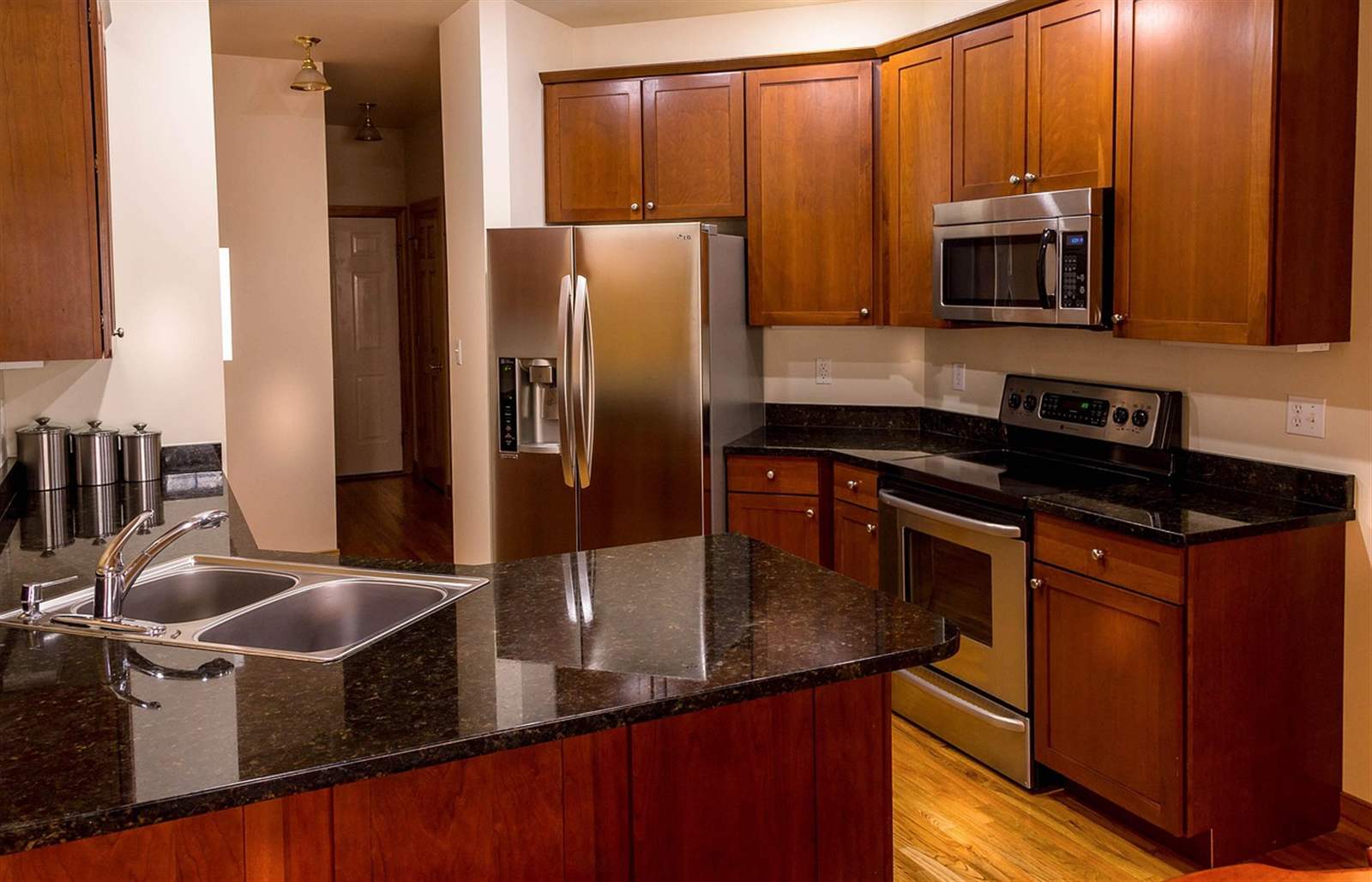
Double-bowl sinks split the basin either evenly or in an offset 60/40 configuration, letting you run two tasks at once — soaking on one side, rinsing or using a garbage disposal on the other. The tradeoff is that each individual bowl is narrower than a comparable single-bowl sink, which matters if you regularly wash large pots.
Our finding: clients who cook often and entertain tend to gravitate toward a single oversized bowl once they see how much easier it makes washing sheet pans and stockpots. Clients focused on everyday cleanup routines — dishes, produce rinsing — usually prefer the divided flexibility of a double bowl.
Mounting style changes what's possible, not just how it looks
Your mounting style decision interacts directly with your countertop material and cabinet setup, so it's worth settling before you shop for a sink by size alone.
| Mounting Style | Countertop Requirement | Pros | Cons |
|---|---|---|---|
| Drop-in / top-mount | Works with any countertop material, including laminate | Lowest-disruption install; widest material compatibility; lowest relative cost tier | Visible rim can trap crumbs; less seamless look |
| Undermount | Requires a solid-surface countertop (stone, quartz, solid surface) | Seamless wipe-down from counter into bowl; more usable counter space | Not compatible with laminate; countertop must be fabricated to the specific cutout |
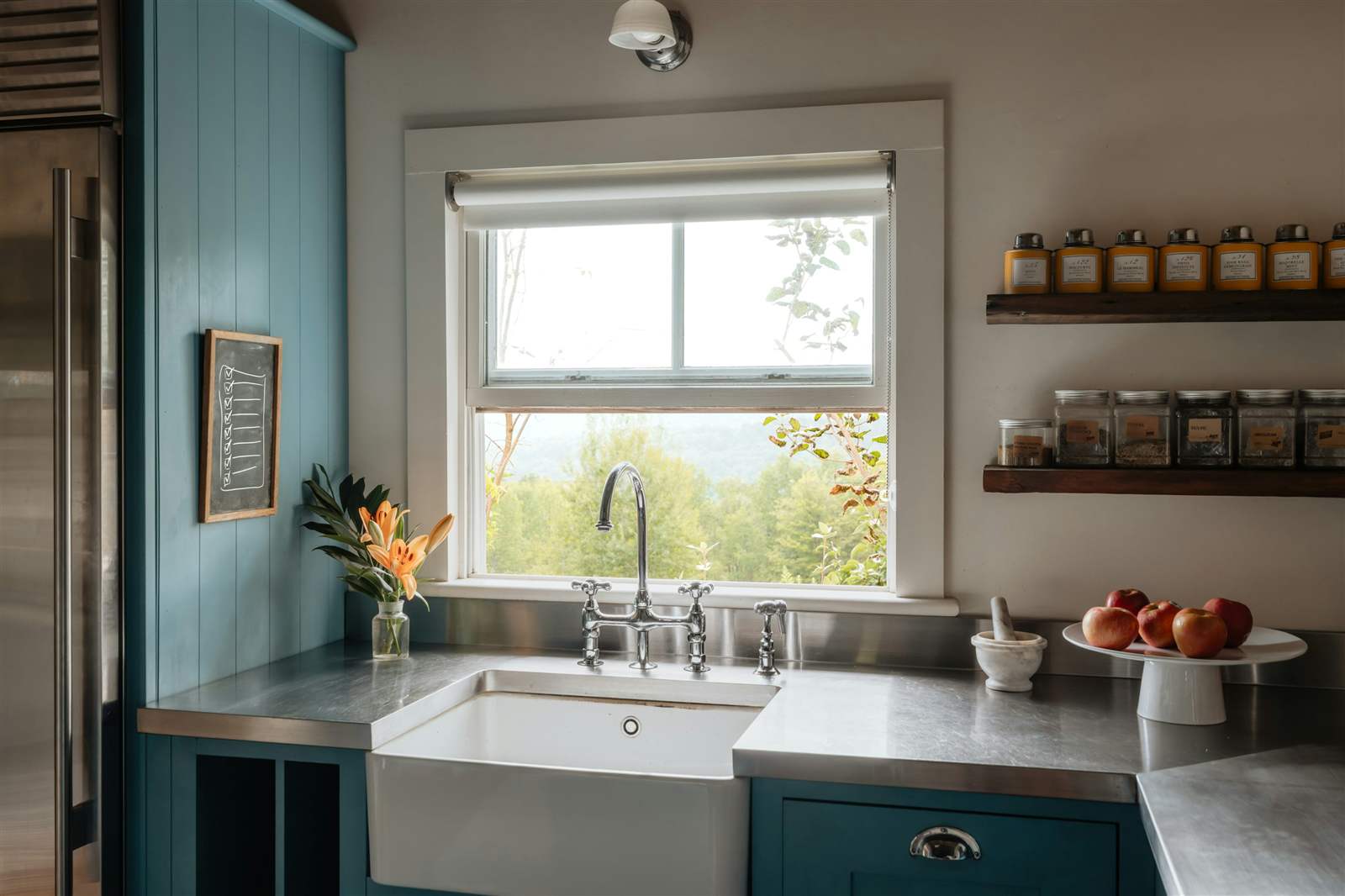
| Farmhouse / apron-front | Countertop is cut to expose the sink's front face | Strong visual statement; large basin capacity for oversized cookware | Cabinet doors below must be shortened; heavier materials may need reinforced support |
Source: Manufacturer installation guidance, industry-standard mounting practice.
Farmhouse sinks in particular aren't a simple swap — the cabinet doors below have to be shortened to accommodate the exposed apron face, which makes this a full-remodel decision rather than a sink-only replacement. If you're already planning your cabinet layout, settle your sink mounting style at the same time.
Material affects size decisions too
Heavier sink materials — fireclay, cast iron, granite composite — carry real weight, and a large-format sink in one of these materials may need reinforced cabinet support underneath, especially in a 33"–36" farmhouse installation. Lighter-gauge stainless steel doesn't carry the same structural consideration, which is part of why it remains the most common material for straightforward single- and double-bowl installations.
Checking your cabinet fit
There's no single blanket rule for "sink width plus X inches equals minimum cabinet width" — every sink model has its own manufacturer-stated minimum cabinet size, and it varies by mounting style, bowl configuration, and brand. Before you commit to a sink, check the specific model's spec sheet against your planned cabinet width rather than estimating from a general rule. Our kitchen cabinet size guide covers standard base cabinet widths if you're still finalizing that layout, and our countertop dimensions guide covers the counter depth your sink cutout will need to work within.
Sink types at a glance
| Sink Type | Typical Depth | Best Use Case |
|---|---|---|
| Compact single bowl | 6½"–8" | Small or galley kitchens, secondary/bar sinks, accessibility-focused kitchens |
| Standard single bowl | 8"–10" | Most common residential default; general-purpose washing and prep |
| Double bowl (equal split) | 8"–10" | Simultaneous tasks — soaking and rinsing, separating dish types |
| Double bowl (60/40 offset) | Varies by bowl | One larger main bowl for big pots, smaller secondary bowl for rinsing |
| Oversized/workstation single bowl | 9"–10"+ | Larger kitchens, frequent cooks washing oversized cookware |
| Farmhouse/apron single bowl | 9"–10" | Large kitchens, statement-focused full remodels |
Source: Elkay Kitchen Sink Buying Guide, manufacturer specification patterns.
Frequently asked questions
What is the standard depth of a kitchen sink?
Depth typically ranges from 6½" to 10". A 6½" bowl preserves more cabinet storage below, while 9–10" bowls handle taller pots and larger loads of dishes (Elkay).
Is there a minimum sink depth for accessible kitchens?
Yes. ADA-compliant installations cap bowl depth at 6" for undermount sinks and 6½" for drop-in sinks, since deeper bowls make reaching the bottom harder from a seated position.
What's the difference between undermount and drop-in sinks?
Undermount sinks require a solid-surface countertop like stone or quartz and mount beneath the counter for a seamless look. Drop-in sinks work with virtually any countertop material and sit with a visible rim on top.
Do I need a bigger cabinet for a farmhouse sink?
Not necessarily bigger, but different — the cabinet doors below a farmhouse sink must be shortened to accommodate the exposed apron face, so it's a modification, not just a fit question.
How do I know if a sink will fit my cabinet?
Check the manufacturer's spec sheet for that specific sink model's minimum cabinet width. There's no universal formula, since it varies by mounting style, bowl configuration, and brand.
The bottom line
Choosing the right kitchen sink size means weighing bowl depth against storage and comfort, deciding between single and double bowls based on how you actually cook, and settling on a mounting style before you shop by dimensions alone. Heavier materials add a structural consideration, and cabinet fit always comes down to the specific model's spec sheet rather than a general rule.
Book a design consultation and we'll help you choose a sink that fits your kitchen and your cooking habits.
Sources
- Elkay, Kitchen Sink Buying Guide, retrieved 2026-08-17, link